chuangzhen@capping-machine.net

EN


chuangzhen@capping-machine.net
EN


Including carbonated beverage bottle caps, juice bottle caps, mineral water bottle caps, etc.
Bottle cap compression molding equipment plays a vital role in the beverage industry. It is an automated equipment used to produce different types of beverage bottle caps to ensure the sealing and freshness of beverages. In the beverage production line, bottle cap compression molding equipment ensures the hygiene and safety of the product.


Such as sauce bottle caps, condiment bottle caps, honey bottle caps, etc.
The food industry has extremely strict requirements for packaging, because the integrity of the packaging is directly related to the quality of food and the health of consumers. Bottle cap compression molding equipment ensures that each produced bottle cap can fit the bottle mouth evenly and tightly by precisely controlling the pressure and speed, preventing the intrusion of air and bacteria. In addition, modern bottle cap compression molding equipment is usually equipped with an automated control system, which can achieve batch production, reduce manual operations, and reduce costs.


Including shampoo bottle caps, shower gel bottle caps, detergent bottle caps, etc.
Daily chemical products, such as shampoo, shower gel, cosmetics, etc., usually need to be stored and transported in a sealed environment to prevent product deterioration or contamination. Bottle cap compression molding equipment produces a variety of daily chemical product bottle caps by adjusting and using different die-casting molds, and ensures that each bottle cap fits the container mouth evenly and tightly, effectively isolating the impact of the external environment on the product. Bottle cap compression molding equipment plays an indispensable role in the daily chemical industry, not only ensuring the quality and safety of daily chemical products, but also promoting technological progress and innovation in the entire industry.


Such as lubricating oil bottle caps, chemical product bottle caps, etc.
Chemical products are often corrosive, volatile or toxic, so they have extremely high requirements for packaging sealing. Bottle cap compression molding equipment plays an indispensable role in the chemical industry. Through this equipment, anti-corrosion, anti-toxic and anti-leakage safety bottle caps that meet national and industry standards are produced. It not only ensures the quality and safety of chemical products, but also ensures the safety and health of workers.

In the realm of healthcare, precision and protection are paramount. Our medical bottle caps are meticulously engineered to safeguard the integrity and efficacy of pharmaceuticals, serving as the first line of defense for health and safety.

In the agricultural sector, safeguarding the efficacy and safety of pesticides is crucial. Our pesticide bottle caps are designed with precision to protect the potency of these chemicals, serving as a critical barrier against contamination and misuse.
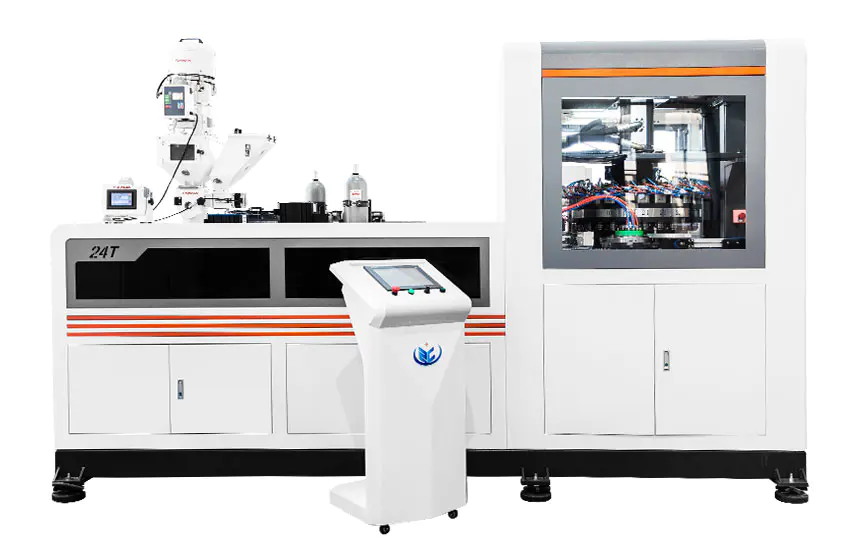
The Cap Compression Machine plays a crucial role in the manufacturing of plastic bottle caps, serving industries such as beverages, pharmaceuticals, cosmetics, and household products. Also known as a cap compression molding machine, it forms bottle caps by compressing pre-heated thermoplastic material into molds, resulting in precise, uniform, and reliable closures. This process differs from injection molding, emphasizing controlled compression rather than high-pressure injection, which can improve material efficiency and minimize waste.
Cap compression molding is a mechanical process in which plastic granules are first heated and softened before being placed into a mold cavity. The Capping Machine then applies pressure through a compression system, shaping the material into a bottle cap with consistent wall thickness. The molded cap is cooled while still in the mold, ensuring dimensional stability and smooth surface finish. Once cooled, the cap is ejected, ready for packaging lines.
The design of the machine typically includes a rotary mold system, allowing multiple cavities (commonly 24 or 36) to operate simultaneously, which increases production efficiency. The molds are generally made of high-quality tool steel, often imported, and undergo precise machining to maintain uniform cap dimensions. Graphite or other self-lubricating materials are sometimes applied to the rotary components to reduce wear and ensure long-term operational stability.
Modern cap compression machines can produce a wide range of cap sizes and shapes. Standard models accommodate cap diameters from 15 mm to 60 mm and cap heights from 10 mm to 35 mm. Production rates for ordinary machines typically range from 15,000–22,000 caps per hour for 24-cavity models and 30,000–36,000 caps per hour for 36-cavity models, depending on cap size, material, and operational conditions. These numbers provide reliable throughput for small to medium-sized production facilities. High-speed models may reach higher capacities, though specifications vary by manufacturer and machine configuration.
Cap compression machines are compatible with various thermoplastic resins, including PP (Polypropylene), HDPE (High-Density Polyethylene), LDPE (Low-Density Polyethylene), and PTE. These materials are selected based on required cap properties such as rigidity, elasticity, and sealing performance. HDPE and PP are commonly used for beverage and pharmaceutical caps due to their strength and chemical resistance, while LDPE is suitable for flexible closures.
The compression molding process ensures minimal material waste compared with injection molding. Scrap material can often be recycled directly, which not only reduces cost but also supports environmentally conscious production practices. The process consumes moderate energy, and careful design of molds and pressure systems helps maintain efficient operation.
The cap compression molding sector continues to evolve with gradual automation and enhanced precision. Manufacturers increasingly focus on reducing energy consumption, improving molding consistency, and adapting to sustainable materials. Innovations in mold design, temperature control, and pressure regulation enable higher production efficiency while maintaining product quality.
In addition, environmental awareness drives demand for processes that minimize plastic waste and support material recycling. Cap compression machines, by their nature, generate relatively little scrap compared with other molding methods and allow easy reintegration of leftover material into production, aligning with broader industry sustainability goals.
The Cap Compression Machine remains a reliable and widely used solution for producing high-quality plastic bottle caps. With capabilities spanning multiple cavity counts, a range of cap sizes, and compatibility with various thermoplastic materials, these machines provide the precision, efficiency, and consistency required by modern packaging industries. Their operational characteristics—efficient material use, consistent molding, and stable performance—make them an essential tool for manufacturers seeking reliable production while maintaining cost control and sustainability considerations.

Copyright © Taizhou Chuangzhen Machinery Manufacturing Co., Ltd. All Rights Reserved.

 中文简体
中文简体 русский
 Español
 عربى
عربى